01traceable
Every claim keeps its receipts.
No finding exists without the records underneath it. You can open the filing, the paper, and the award that produced the conclusion, and disagree with it if you want to.
Lapis Research is a for Startups partner
Founders at Series A and B deep tech companies burn hours on patent searches, IP reviews, and competitor news, and still cannot tell which of millions of records touch their program. Lumen puts autonomous researchers on it instead, and tells you exactly what changed.
Every cell is one patent, paper, grant, trial, or regulatory event that entered the public record in seven days. Colour is the source. Nothing here is secret and nothing here is addressed to you.
You already know the drill. A founder or a lead scientist disappears for two days into patent databases, IP reviews, journal alerts, and competitor news, and comes back with a folder of maybes.
There are millions of records and no honest way to tell which of them touch your program. Not one is decisive on its own, so each gets read, shrugged at, and forgotten. Meanwhile the filings, papers, awards, and hires behind a rival program have been public for a year.
The usual answers cost more than the problem. An in-house intelligence team runs into six figures and is a hire you cannot justify before Series C. A consultant charges thousands for a report that starts ageing the day it lands, and you still do not get the underlying records.
What is moving around this program that we have not connected yet?
Four streams enter one layer: patents, papers, awards, and news. No source is read in isolation, because no single source is conclusive on its own.
A scout is a standing instruction to watch one part of your field. You give it an objective in plain language: a technology, a claim area, a set of organizations. It decides which sources to read and what counts as a change worth reporting. A saved search returns the same query forever. A scout keeps working out what to look at.
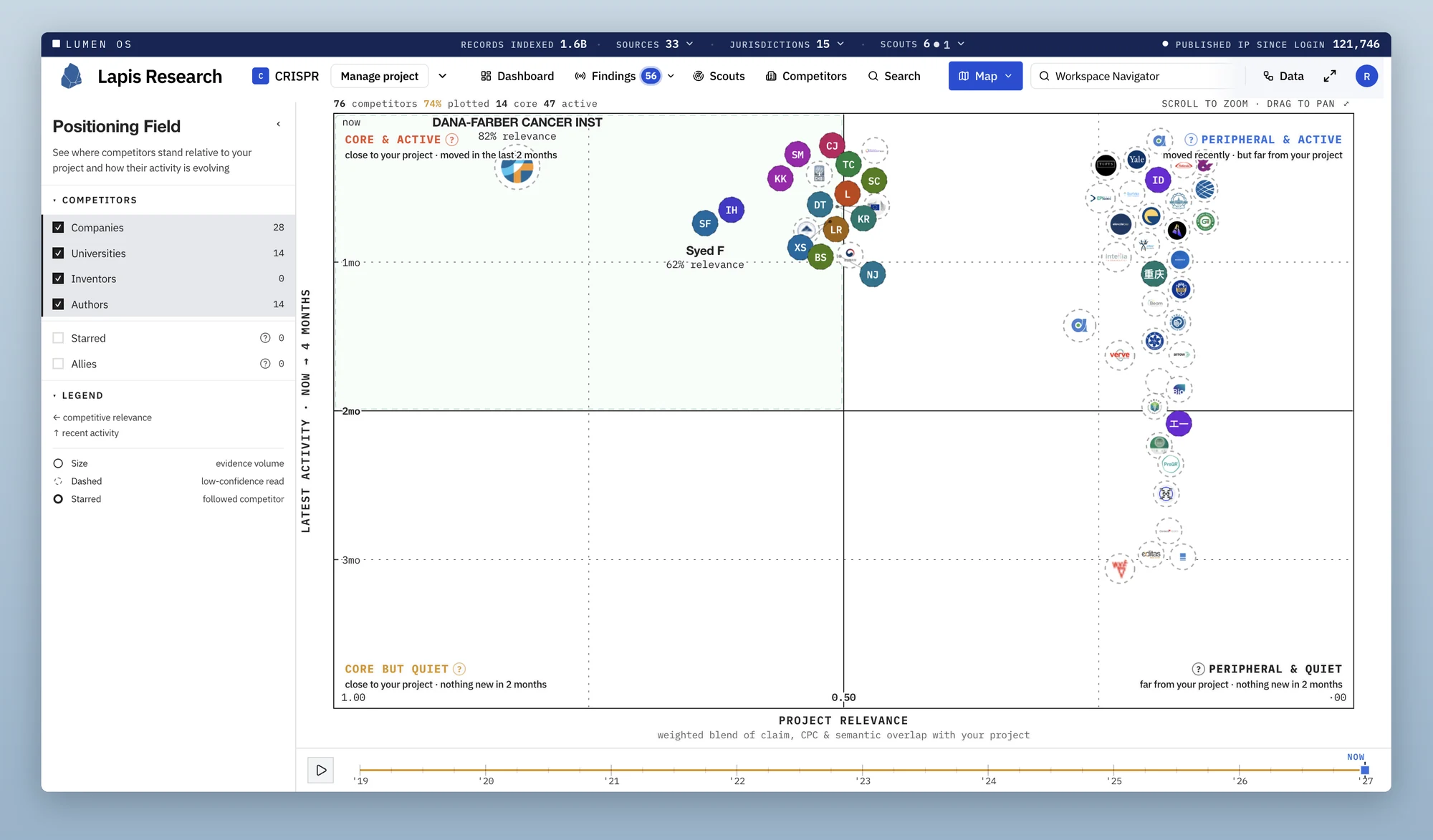
Five ordinary public records, none of them decisive alone. Watch them converge on one organisation moving in one direction.
Every one of these has been public for weeks. Read alone, each is ordinary, which is why each gets read alone and forgotten.
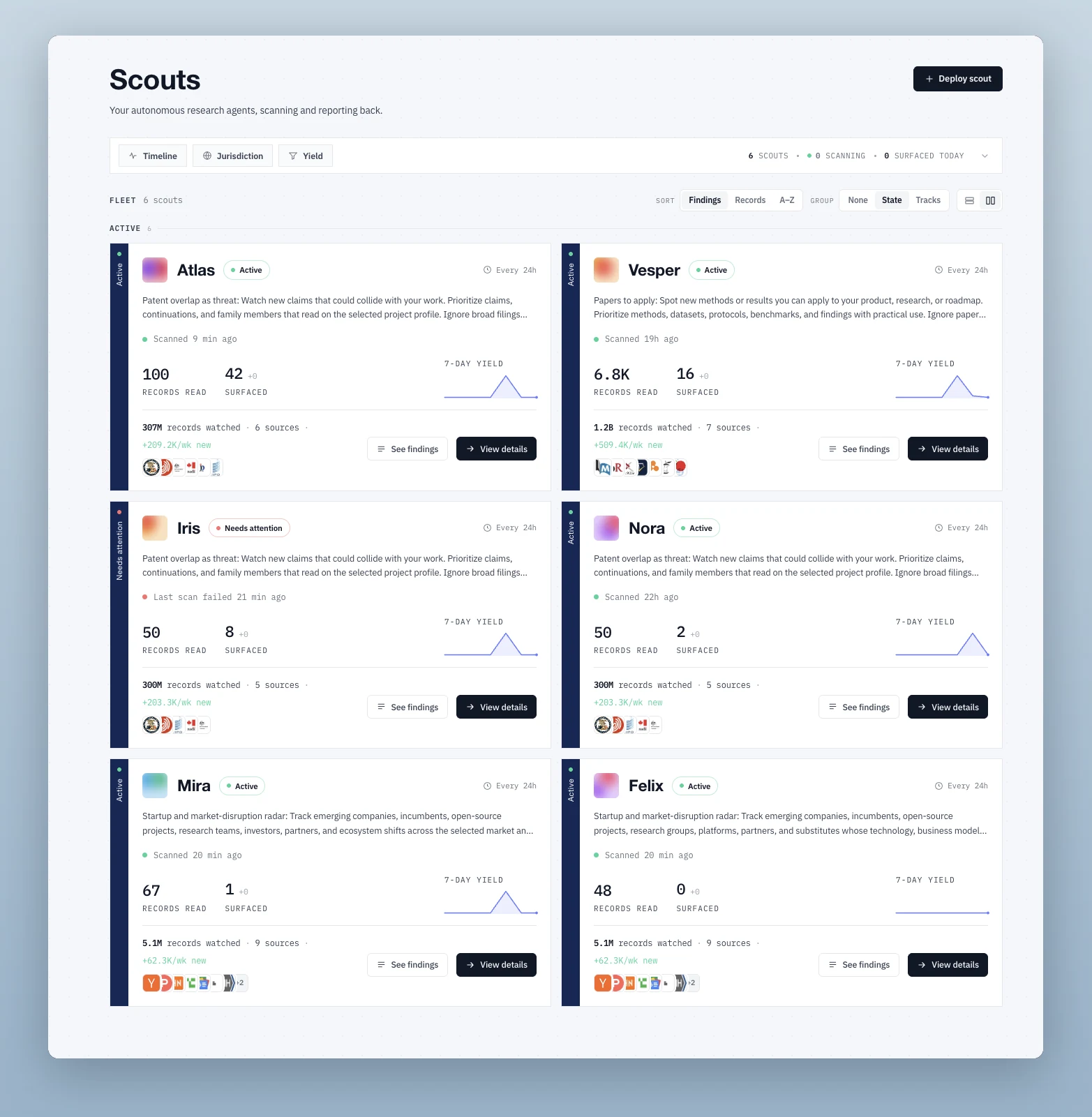
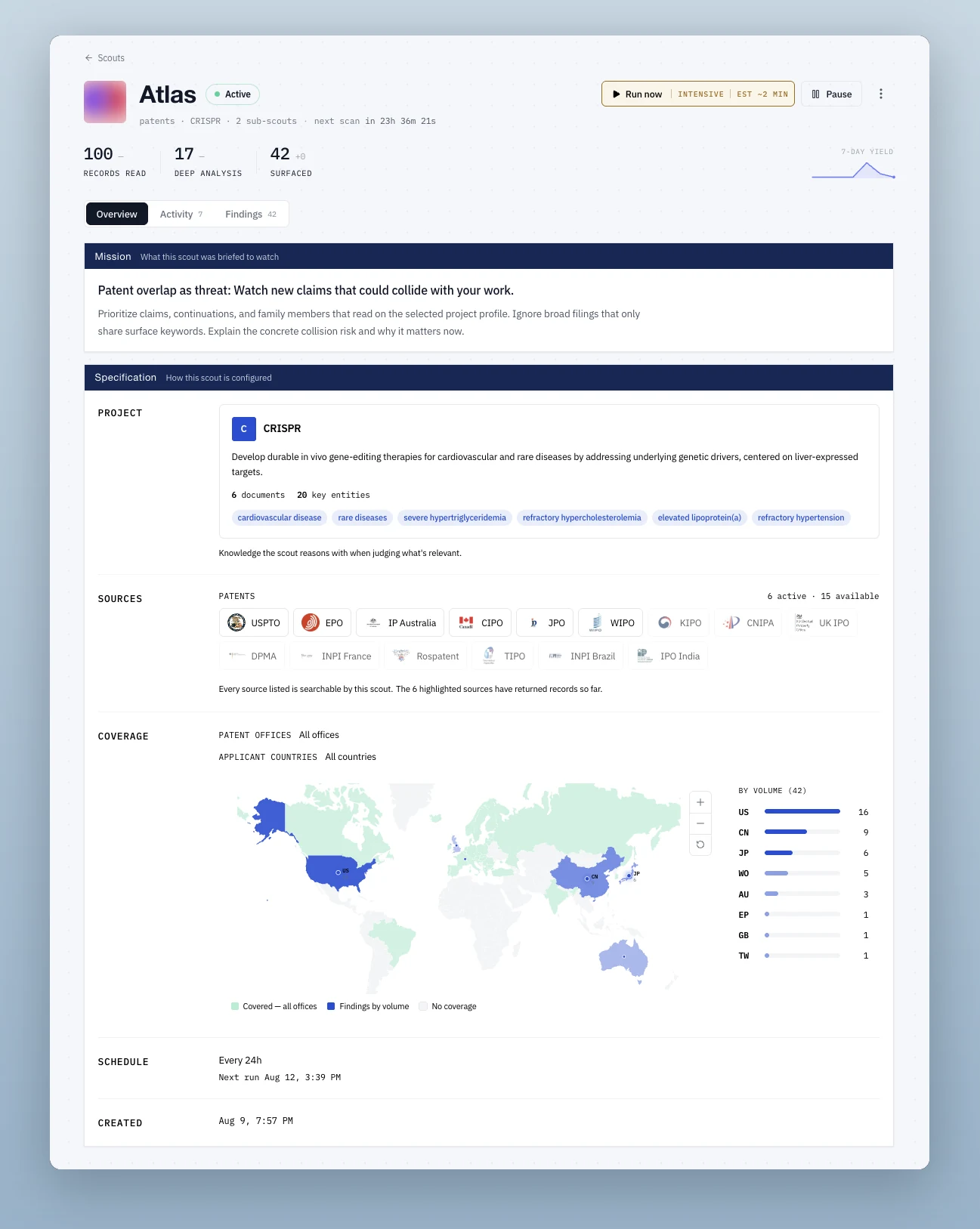
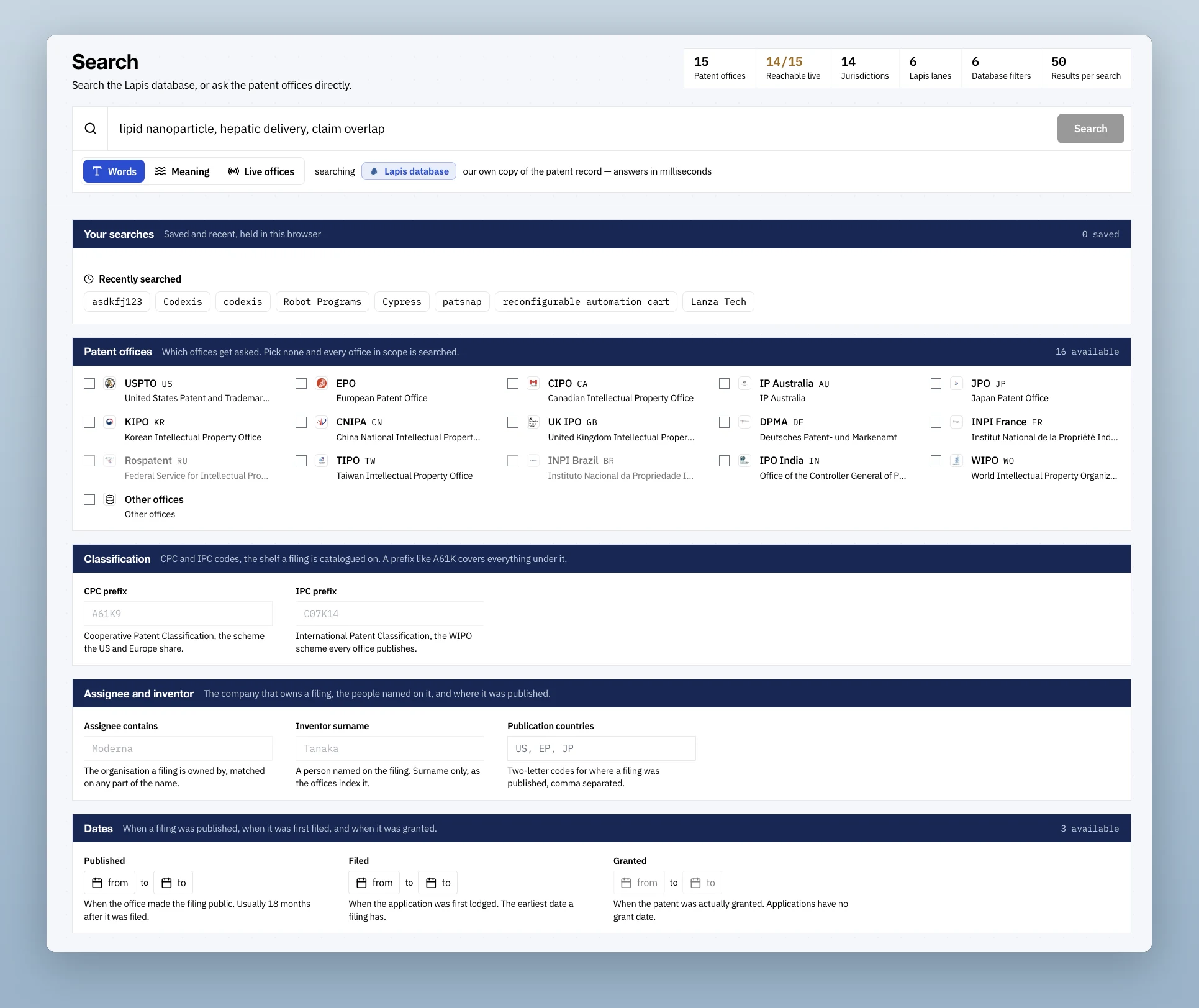
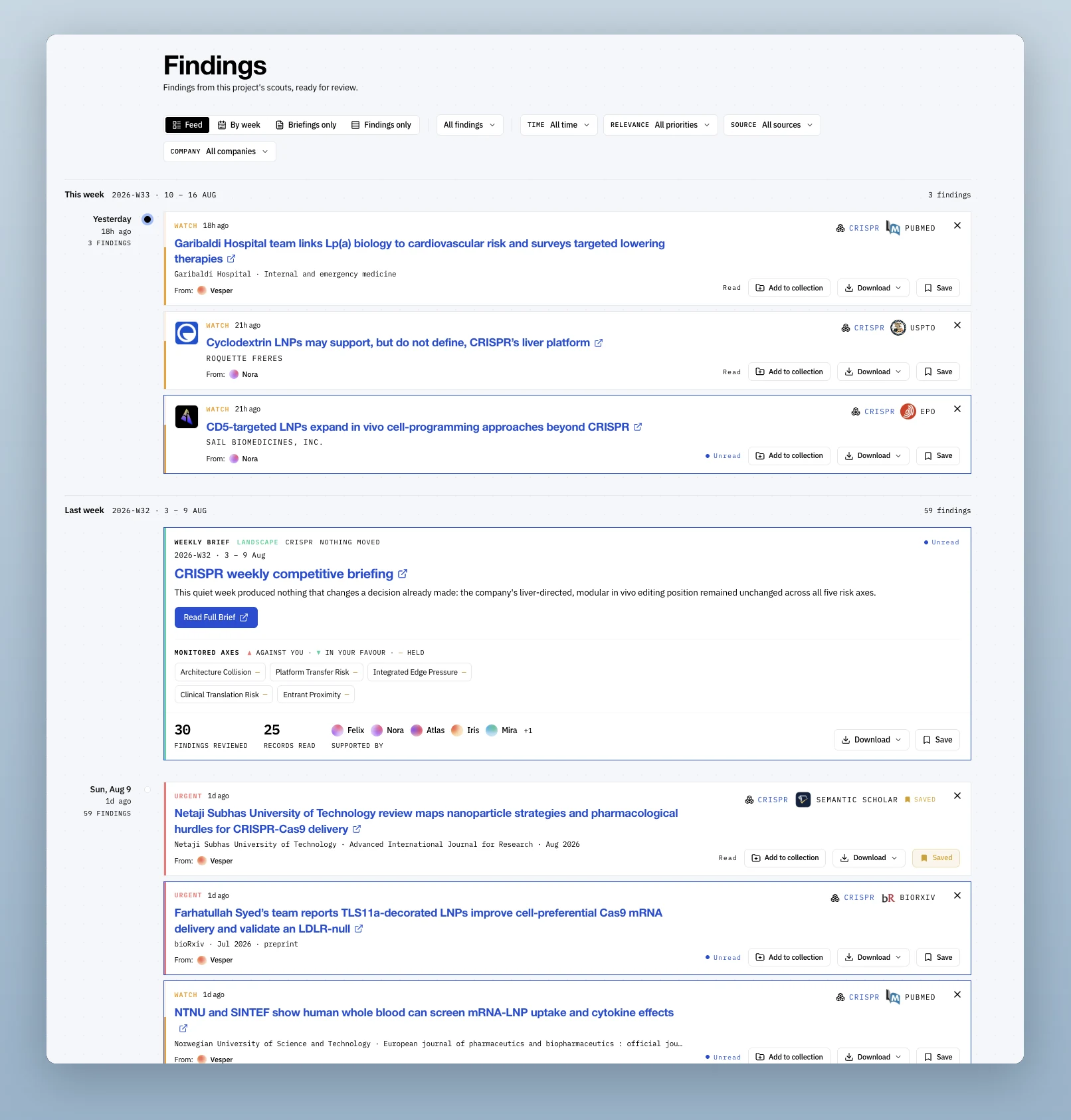
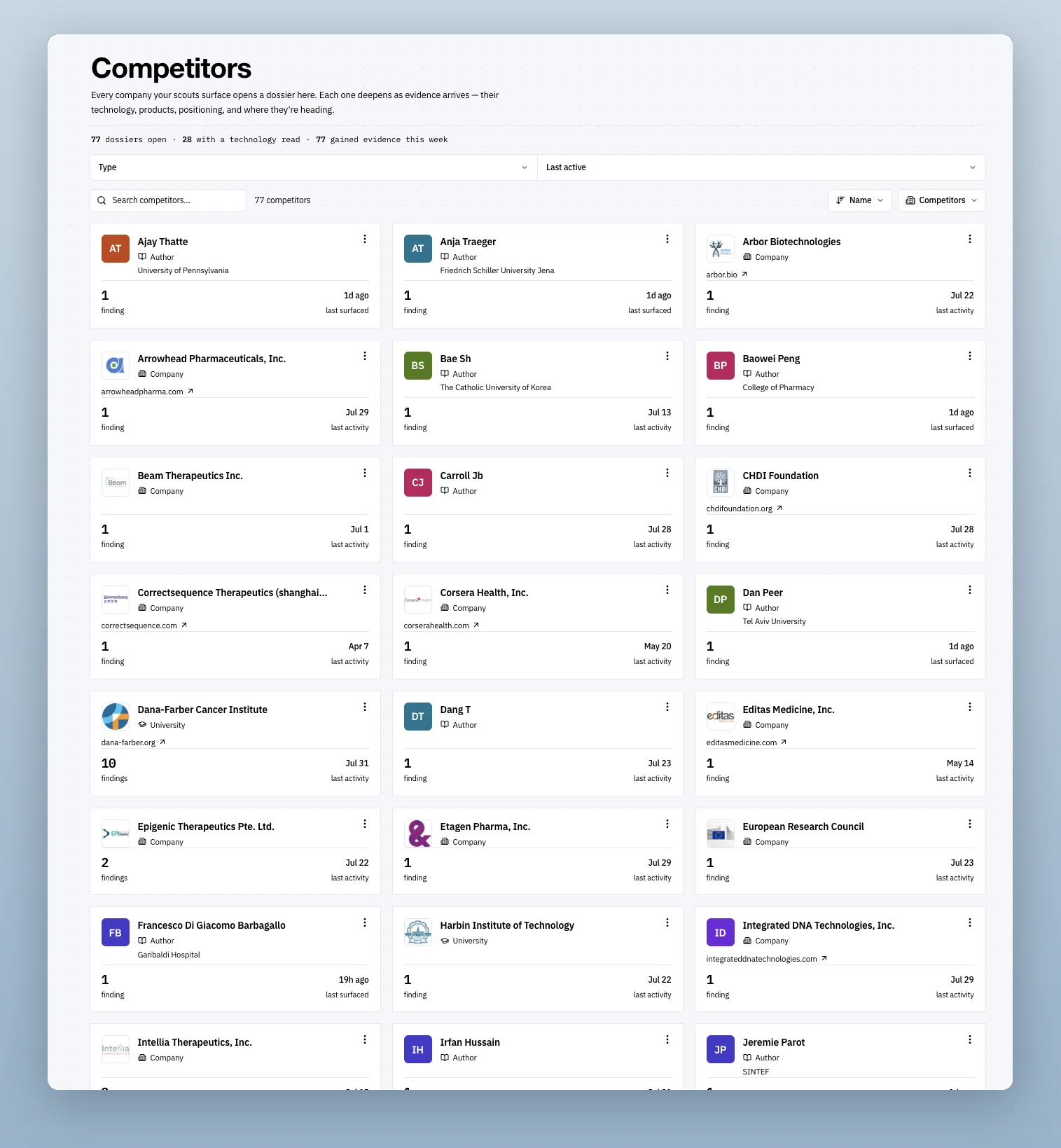
Seven screens, from defining a program to acting on a brief. Every one of these is the running product, not a mockup.
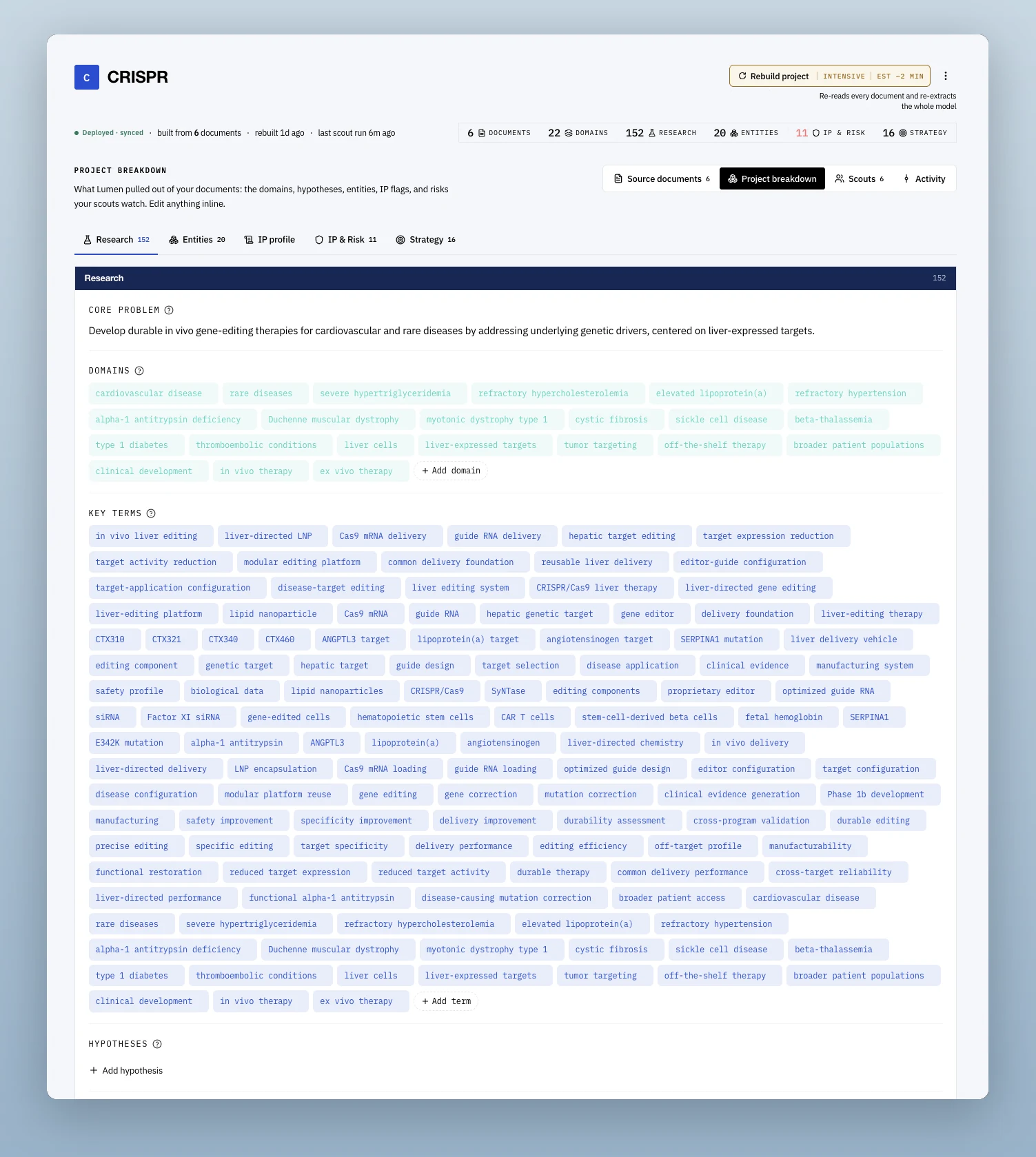
Upload what already describes the work. Lumen reads it and pulls out the domains, key terms, entities, IP flags, and risks, then keeps that breakdown as the thing every scout later judges a record against. Edit any of it inline, and rebuild when the program moves.
No finding exists without the records underneath it. You can open the filing, the paper, and the award that produced the conclusion, and disagree with it if you want to.
The same patent is material to one program and noise to another. Lumen scores against your technology and roadmap, not against a keyword list that any competitor could guess.
A freedom-to-operate search starts ageing the day it is delivered. A watched perimeter does not, because the landscape is re-read continuously and you are told what moved.
Every finding carries the trail that produced it: when the record was ingested, what it was screened against, what it was cross-referenced to, and the moment it was escalated. Nothing arrives as a verdict you have to take on trust.
Bring one program and the organizations you already worry about. We will show you what the last ninety days of public record say about them.